
A hive of activity…
As summer unfurls across South East Devon, our protected heaths, estuary and coastline are buzzing. Summer is a busy time across our sites, with an influx of visitors while breeding season makes birds and reptiles especially vulnerable to disturbance. Many species need quiet, undisturbed spaces to raise their young, so helping visitors understand this is a key part of our work. Our familiar 'Paws on Paths' message is a reminder that paths are for paws, boots, wheels and hooves — and that simple actions, like staying on them, can make a big difference, whether you walk, horse-ride or cycle.
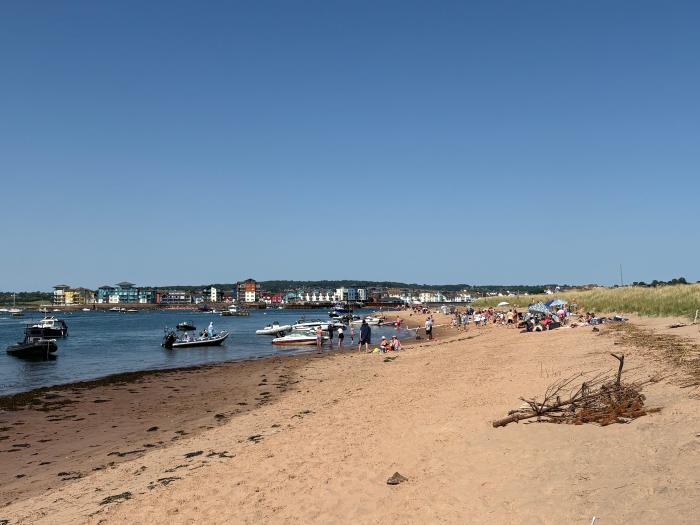
A busy Dawlish Warren landing zone in May
In April, we successfully completed the final expansion of our team for this round of funding with our new team leader Michael Rogers. Bringing heaps of enthusiasm and a wealth of experience from his background in conservation management, we are so excited to have Michael on board and look forward to all the brilliant work we can do with our increased capacity.
Our funding supports not only our team of wardens, but also a wide range of projects designed to protect nature while improving people’s experience of our special reserves. This includes our sister project - Devon Loves Dogs, access improvements on our nature reserves, such as the car park works on the Pebblebed Heaths, and the creation of alternative greenspaces for everyone to enjoy. One project we have been particularly proud of this spring is the installation of new signage at Dawlish Warren.
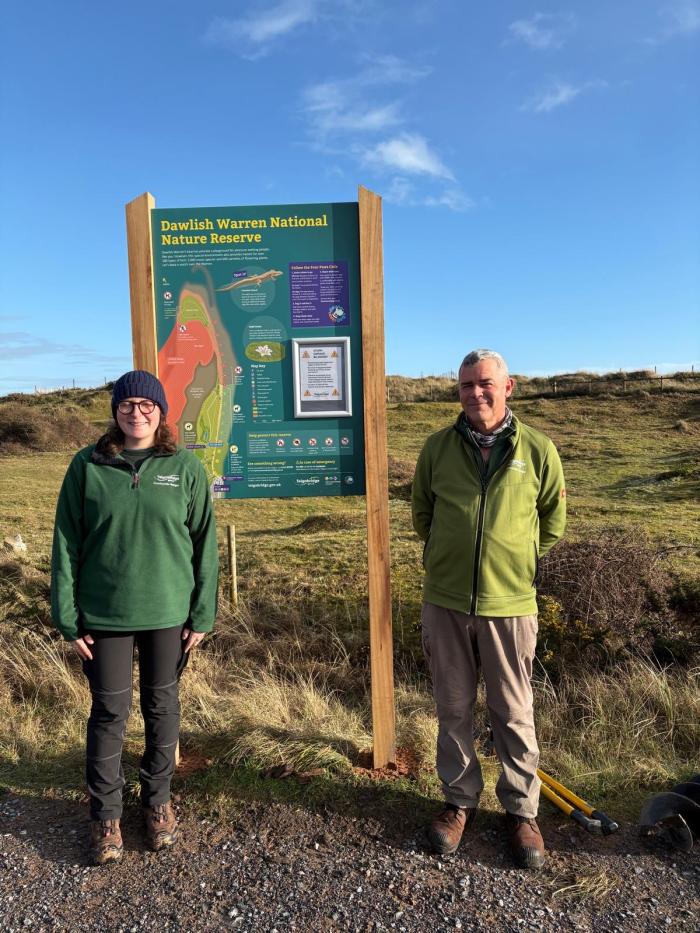
Ranger, Phoebe Voysey (left) and Site Manager, Steve Edwards (right) with one of the larger new signs at Dawlish Warren
Following consultation with access and countryside management expert, Steve Jenkinson, we wanted to make it easier for visitors at Dawlish Warren to understand where dogs can be off lead, on lead, or not allowed at all. The new colour-coded system offers much clearer guidance, helping people to enjoy their visit with confidence while reducing the risk of disturbance to wildlife. We have also refreshed the larger signs across the site to make navigation easier and to provide useful information on site species, tide times and upcoming events.
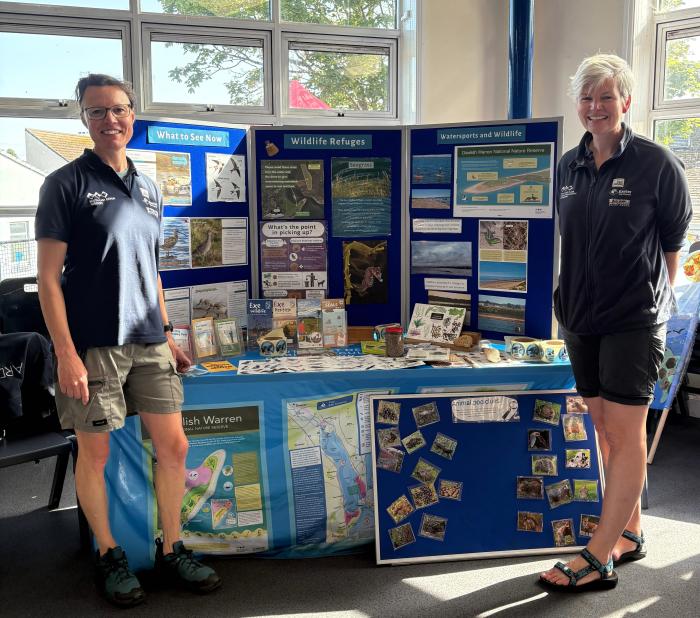
Wildlife Wardens, Marije Zwager (left) and Katie Jones (right) at Turn the Tide Festival 2026
Alongside this, it has also been a busy start to events season. We have already enjoyed meeting people at Turn the Tide, X Bay, the RNLI Boat Jumble and Budleigh Gala Week, with plenty more still to come over the summer. Some of the events we will be attending are: Sustainable Seas at Exeter Quay, Imaginarium, Broadclyst Fun Day, Exmouth Festival, Heath Week and Lympstone Marines Family Day. Do check out these wonderful local events and come along to say hello if you can. Whether we are out on the reserves, at a pop-up gazebo, or chatting to people at community events, every conversation helps build understanding and support for the wildlife that makes South East Devon so remarkable.
Welcome Michael, our new Wildlife Warden Team Lead
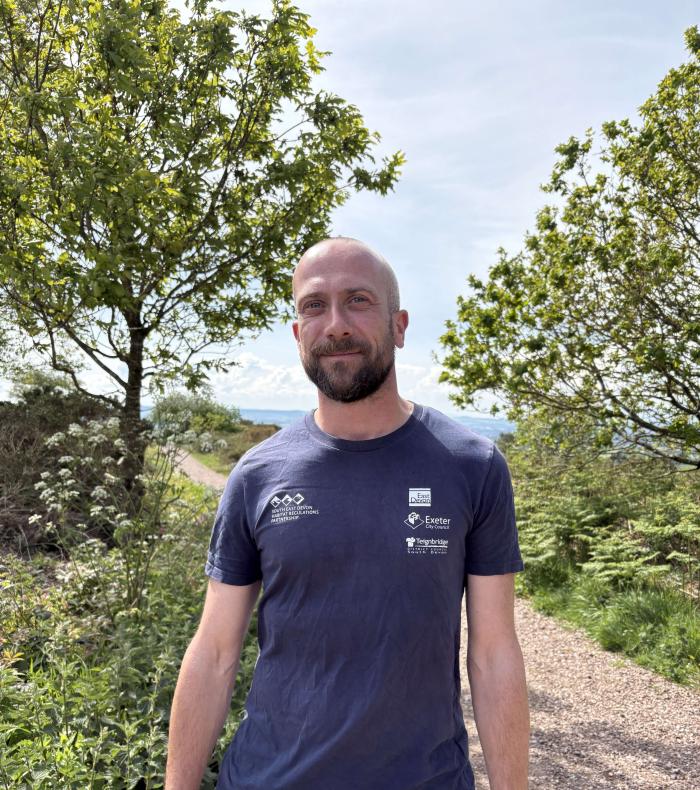
Michael Rogers, Wildlife Warden Team Leader
I am delighted to join South East Devon Wildlife as Wildlife Warden Team Leader. I am joining the team from one of our partners - Devon Wildlife Trust - and I’m delighted to get to work on these incredible, internationally important sites with such a knowledgeable and dedicated team.
My background is in nature reserve management, developing and delivering landscape scale conservation projects and species recovery projects. Beginning my career as a volunteer at Durham Wildlife Trust I have since spent my career at the Devon and Yorkshire Wildlife Trusts, Butterfly Conservation, the Rivers Trust and Bumblebee Conservation. Working on the West Country Buzz project first brought me to Devon, working to protect species like the brown banded carder bee, and a year later I made the move from Scotland permanent, joining Devon Wildlife Trust on a maternity cover contract.
I am excited to bring my conservation and management experience to this exciting new role where I will be out and about with our warden team on Dawlish Warren, the Exe Estuary and the wonderful Pebblebed Heaths. The most exciting part of the role is to be working across a range of partner sites and organisations that make up South East Devon Wildlife.
Where do all our winter waders go?
Our winter newsletter and social media posts are filled with all the incredible birds we see on the Exe estuary and in the wildlife refuges. Whilst we mention their amazing migrations, we don’t tend to consider what they’re doing, when they get there. Warden Katie sets out to find out more about some of our much loved birds….
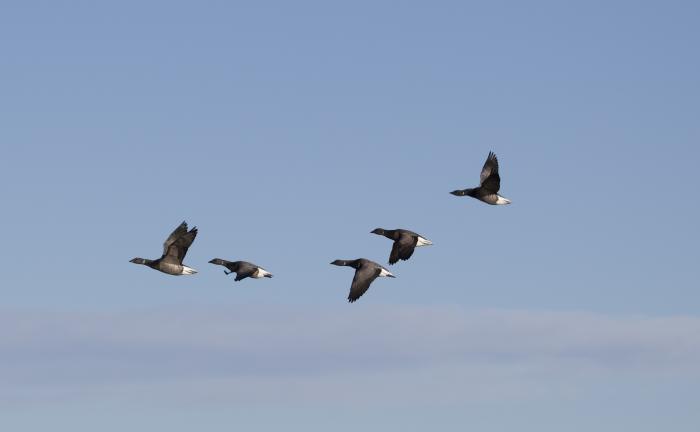
Dark-bellied brent geese in Flight, Derek Carter
After our dark-bellied brent geese and black and bar-tailed godwits, have filled up on the rich estuary mud invertebrates and highly calorific seagrass at the start of the year, they are ready to make the journey back to northern and eastern Europe and Siberia.
The main breeding range for dark-bellied brent geese is North Siberia, and particularly the Taymyr Peninsula region situated within the Arctic circle, which is approximately 3000 miles from Exmouth! The geese make their way there in family groups stopping at a network of staging grounds, rather like motorway service stations to rest and re-fuel. Unlike some migrating birds they can’t store sufficient fat reserves to do the whole journey in one go.
Brent geese tend to pair for life and when they arrive in northern Siberia, they will already be paired up. The female lays eggs within 2 weeks of arrival in a hollow, bowl-shaped indentation on the ground, lined with grass and feathers. Incubation (keeping the eggs warm while they develop), is the sole responsibility of the female and lasts between 23-25 days. If she needs to leave the nest to feed, she covers the eggs up with vegetation. Brent geese lay between 4 and 6 eggs and have one brood per year.
During the incubation period, the male guards the territory. Brent geese are highly territorial and aggressive and can see off most predation attempts, including gulls, skuas, and ravens, but are unable to stand up to larger predators, such as the Arctic foxes. Chicks fledge six weeks later, as soon as brent geese chicks hatch, they leave the nest and are led by their parents to suitable foraging grounds where they eat a similar diet to their parents consisting of seagrass and sea lettuce. Adults don’t feed their offspring directly, but the goslings learn to feed by foraging independently alongside their parents. A little bit of tough love!
Once the breeding season is over and the surviving chicks have developed sufficiently to migrate, hormonal changes will start to take place within the population as the daylight hours shorten and the temperature drops significantly. The brents flock together in numbers and embark on a feeding frenzy to build up fat reserves for the long journey ahead.
By comparison, bar-tailed godwits which we also occasionally see on the Exe estuary do their migratory journey all in one trip with no stops! They are able to absorb up to 25% of their internal organs such as the liver and stomach to not only make room for extra fat but also to make them lighter. The heart and flight muscles retain their mass, rendered more powerful as they’re serving a lighter body. Once the godwits get to their breeding grounds, the internal organs can incredibly re-grow!
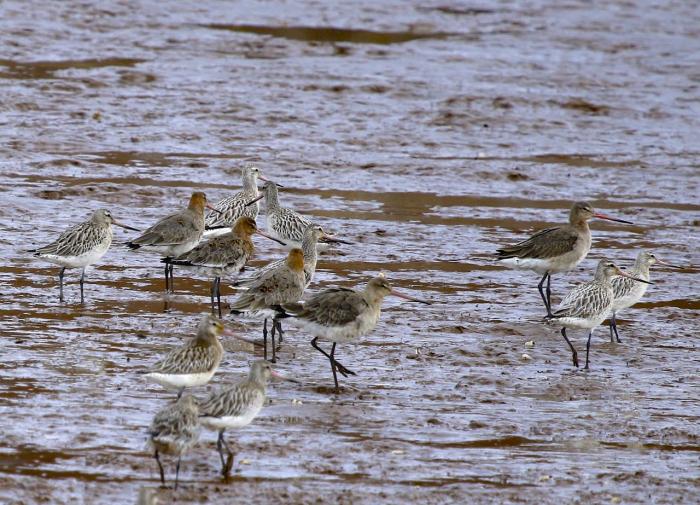
Godwits on the mudflats, Derek Carter
Both sexes help build the nest, a simple scrape on the ground located near a tussock or other low-lying vegetation, lined with lichen, mosses, dead leaves and roots. The female lays 2-5 eggs and they have one brood a year. Both sexes incubate the eggs, and the chicks are well developed when they hatch, being able to run, swim and catch insects within a couple of days of hatching. Adults typically leave the chicks once they are able to fly, approximately 28-30 days after hatching.
After the breeding season, bar-tailed godwits congregate on migratory staging grounds in the thousands to fatten up before their long flight back in part to the UK where we will once again say hello to them on the Exe estuary!
A symbiotic spectacle
Imagine having only five days to flutter in the sun, find a mate and lay eggs to secure the next generation? From late June until late August this is the task of adult silver-studded blue butterflies (Plebejus argus) after emerging from their underground chrysalis in the nest of black ants (Lasius niger and Lasius alienus) with whom they share a symbiotic relationship.
Symbiosis is a close, long-term interaction between two different species “living together”, which is crucial for ecosystem balance and, in this case, a good example of mutualism because both species benefit from the interaction.
Silver-studded blue butterflies are most often associated with heathlands of Southern England such as The Pebblebed Heaths, but also occur on limestone grasslands and sand dunes. They require a sparsely vegetated, sunny habitat, a thriving black ant population and the right plants to lay their eggs on, namely heather, gorse, common bird’s-foot trefoil, common rock-rose and horseshoe vetch. Females specifically lay eggs on plants near black ant colonies which they detect via chemical cues.
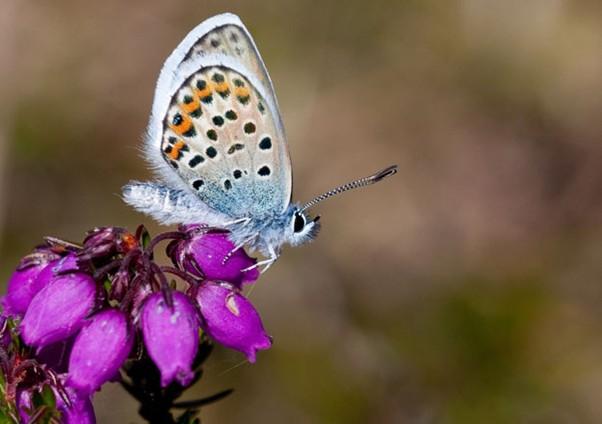
Silver-studded blue on heather, Peter Eeles
In the first stage of their fascinating life cycle, the fully formed caterpillar remains tucked up inside the egg until the following March.
After they hatch, the caterpillars (larvae) produce a sugary substance that attracts the ants, which then transport them to their nest. The ants benefit from drinking this nutritious honeydew and in turn protect the caterpillars from predators and clean them to prevent disease. They even escort the larvae out to feed on host pants at dusk, protecting their precious cargo from other insects and competing ants like a miniature army!
So important is this relationship to the survival of the ant colonies that they even allow the larvae to pupate inside the safety of their nest and then continue to tend to the freshly emerged butterfly until its wings are dry and it is able to fly away to complete its life cycle and ensure the future of both species once more.
With their slow, fluttering, ground-hugging flight, silver-studded blue butterflies rarely travel more than 20 meters from where they emerged and on sunny days males can be seen actively patrolling for unmated females. Though similar to the common blue, the males have thick black borders to both their underside and upperside and both sexes have tell-tale shiny blue centres of the marginal black spots on the underside of the hindwing. Getting a good photograph with the wings closed really helps here!
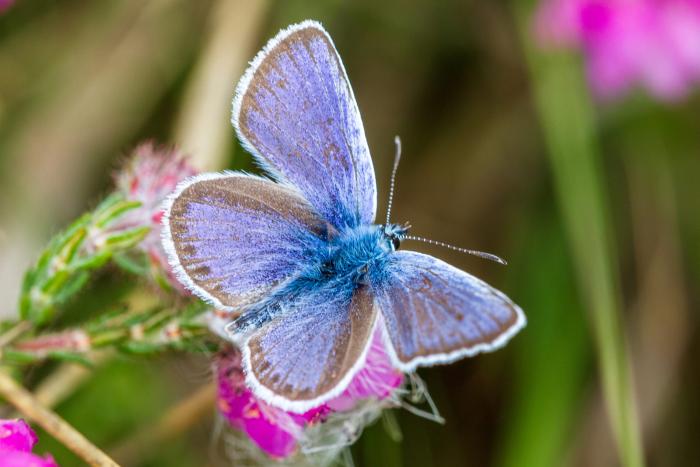
Silver-studded blue upperwing, Malcolm Jarvis
Regretfully, mainly due to the loss of both the quantity and quality of its heathland habitat this species of butterfly is now in serious decline. In England, heath now covers less than a third of one percent of the land area which is why conservation of the Pebblebed Heaths right here in Devon is such a high priority.
Paws for thought: the hidden environmental impacts of dog walking
Last year my team and I, had the opportunity to attend the Managing Dogs in the Countryside conference, hosted by Dorset Dogs. As many of you know, our work focuses on patrolling internationally important nature reserves talking to dog walkers, so this event was right up our street. At the conference, we learned all about national schemes and best practices to managing the relationship between dog walking, wildlife, and the environment. Gaining us many tips and tricks for our work and local scheme Devon Loves Dogs.
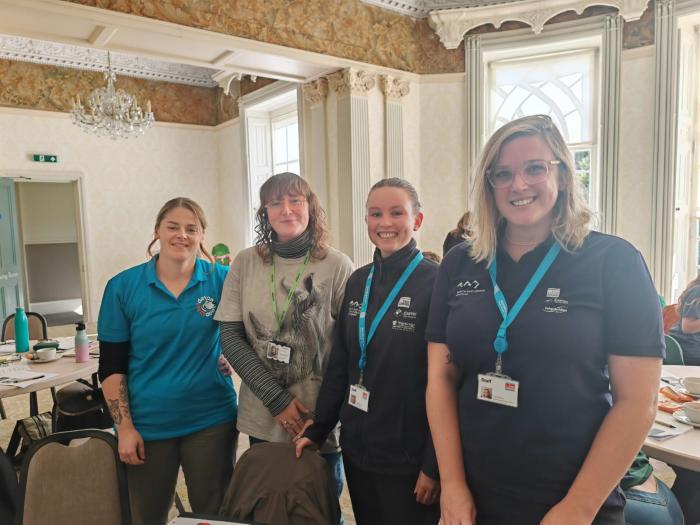
Colleagues Trish Waller (Assistant Project Officer), Phoebe Voysey (Ranger), Claire Spence (Wildlife Warden) and Lucy Dennis (Greenspace Officer) at the recent Managing Dogs in the Countryside Conference (left to right)
We know that dogs play a vital role in our lives, which is evident by the 12.5 million dogs we have in the UK, as they improve our physical and mental wellbeing. However, with so many dogs, this can lead to adverse effects on wildlife and the countryside.
One presentation at the conference which was particularly insightful was Paws for Thought: Toward Environmentally Friendly Dog Walking in the UK presented by David Bavin. Their team have completed a hefty piece of research focusing on how dog walking impacts biodiversity.
This work started off by looking at perception verses evidence on how dog walking is impacting the environment. Following this research they held workshops, one with conservation professions and one with canine professionals. What was very interesting is that conservation professions were quite aware of these evidenced impacts but canine professionals not so much. David Bavin and his team then plotted the 13 topics on a graph of what canine professions were aware of verses the complexity of each topic.
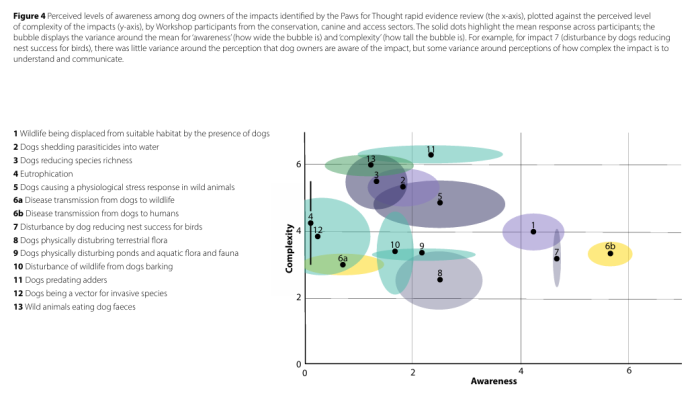
Graph from Report ExCases Misson: Paws for Thought
As a conservation professional, I was quite surprised that the dog world may not be aware of all these impacts. Hence, I wanted to share more about the top 5 areas this research paper found that dog owners may not be aware of.
1. Eutrophication – How Dog Waste Changes Habitats
Eutrophication sounds like a big word, but it is simply a habitat, often water, which becomes overly enriched with minerals and nutrients. This can happen in many ways such as through agricultural run off or sewage discharge. But did you know that dog urine and faeces can also cause eutrophication through increasing the nutrient levels, particularly nitrogen and phosphorus in soils.
In areas which are heavily used by dogs, the soil chemistry can be altered leading to changes in plants diversity. This altered soil chemistry often favour common, nutrient-loving species over native, low-nutrient plants. It is important to realise that when the plants change, this causes a chain reaction of different insects and wildlife using the area, ultimately leading to a different habitat being formed.
You can see this clearly on the Pebblebed Heaths. Have a look around the car parks, you will see quite a lot of bramble growing. These are highly vigorous, nutrient-loving plants, which have thrived off the localised dog waste. However, when you walk 30m away from the car parks you will see heathland species, such as gorse and heathers which like nutrient poor soils and are the key plants for heathland.
2. Dogs as Carriers of Invasive Species
Did you know that dogs can unintentionally spread invasive plants and organisms. Seeds and plant fragments can attach to fur or paws and be transported between locations. They can also create openings for these invasive species through disturbance of existing vegetation, both on land and in the water.
For example, Himalayan balsam (Impatiens glandulifera) on the Pebblebed heaths. Himalayan balsam is an invasive species from Western Himalayas and was introduced to Britain in the 19th century as an ornamental plant. However, it quickly escaped gardens and spread into the wild. These plants can grow up to three meters tall producing thick stems and clusters of pink, helmet shaped flowers. What makes them so invasive is their exploding seed pods. With the slightest touch, burst open and can launch their seeds up to 7 meters away. The lightweight seeds can travel even further through attaching to animal fur.
Hence, it is always good to be aware of what areas and in which season you walk your dog in. Keep an eye out for Himalayan balsam and you can avoid walking your dog there from August to October in order to dodge the highly explosive seed pods.
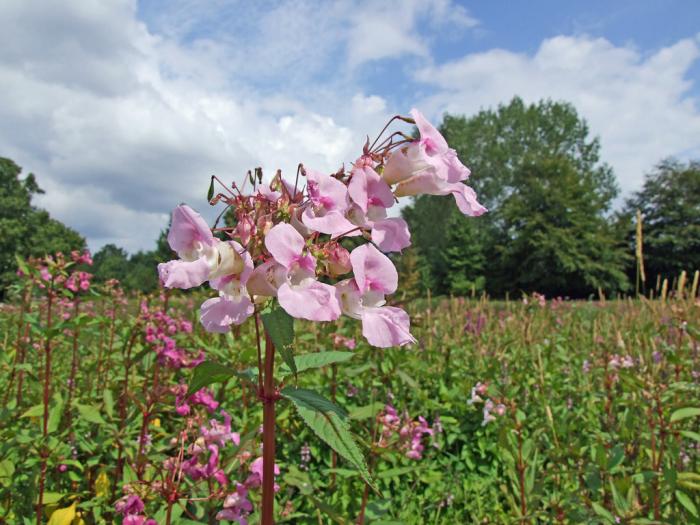
Himalayan balsam photo from Flicker Philip Gooddard
3. Disease Transmission Between Dogs and Wildlife
Did you know that dogs are able to transmit diseases to wildlife? Many dog owners are aware that dogs can transmit diseases to humans but fewer realise that dogs can also transmit diseases to local wildlife. Dogs can carry pathogens such as canine distemper and parasites, passing them between wild animals, the environment and humans.
Dog poo, if left behind, also poses a widespread contamination risk to natural spaces, potential spreading Toxocara (round worm) to people. Even in water, small amounts of dog poo can contaminate a large area to the point where they fail to pass bathing water compliance tests.
This is only one reason why it is so important to pick up after your dog.
4. Wildlife Eating Dog Poo
It may come as a surprise, but dog poo can become a food source for wildlife such as foxes. It may seem gross, but it can be a predictable alternative to wild prey or when preferred prey become scares/unavailable. While this might seem harmless, it can alter natural feeding behaviours and create dependencies on human-derived food sources. As mentioned in the previous point, it can also facilitate the transmission of diseases to wildlife. However, the long-term ecological effects of wildlife eating dog poo are still not fully understood.
5. Dogs Reducing Species Richness
Last but not least, did you know physical disturbance, such as trampling vegetation or entering ponds by dogs, can reduce species richness. Species richness is the scientific name for the total number of different species within an area. Physical disturbance, such as walking off the path, can impact the plants which grow there. It can also reduce the abundance and diversity of bird and other wildlife. This is particularly important on the Pebblebed Heaths because it is an internationally important site for ground nesting birds such as nightjars and dartford warblers. They are particularly sensitive to dog disturbance, as dogs may flush parents sitting on eggs or trample on their young. Studies show that even low levels of disturbance can affect birds, plants, and aquatic life, ultimately lowering overall biodiversity. This is why the Pebblebed Heaths has a Paws on Path policy, so please keep yourself and your dogs on the path.
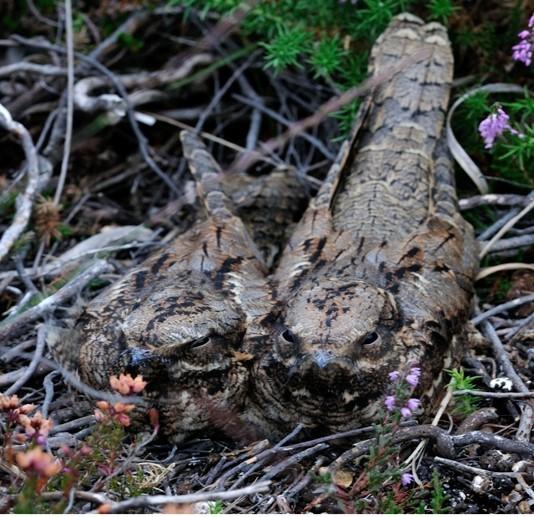
Nightjar pair on ground nest
Understanding these impacts is the first step toward more environmentally friendly dog walking. Small changes, such as picking up after your dog and choosing different areas to walk depending on the season, makes a big difference in protecting the natural spaces we all enjoy.
If you would like to find out more about Paws on Paths or alternative walking routes visit Devon Loves Dogs. And if you would like to find out more about the research behind this news article visit ExCASES Misson: Paws for Thought.
Written by Wildlife Warden, Claire Spence
Where can I BBQ this summer?
The weather has certainly been heating up, so it’s great to have the chance to eat outdoors. It can be difficult to know where is suitable for a BBQ, so it’s always best to do your research beforehand. Most information can be found online, but lucky for you, we’ve put together some useful tips for BBQing in South East Devon.
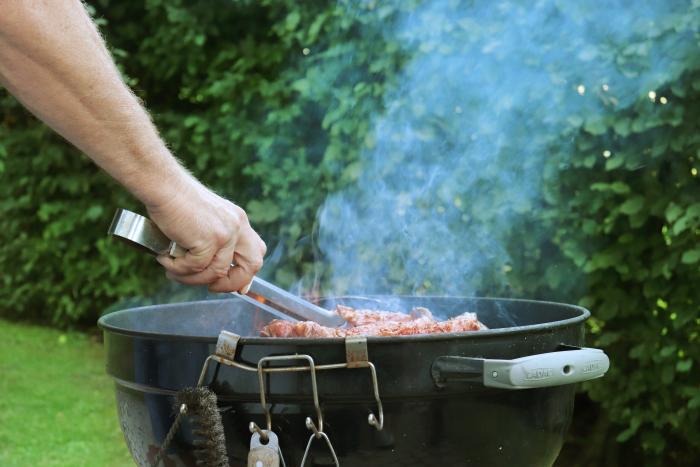
A BBQ in a park, Pixabay
If you’re looking for a beach setting, all beaches in East Devon allow BBQ’s and most in Teignbridge do too. Please note, however, that there are often more restrictions on open fires.
There are strictly no BBQs or open flames allowed on nature reserves such as the Pebblebed Heaths and Dawlish Warren – this includes the beach at Dawlish Warren.
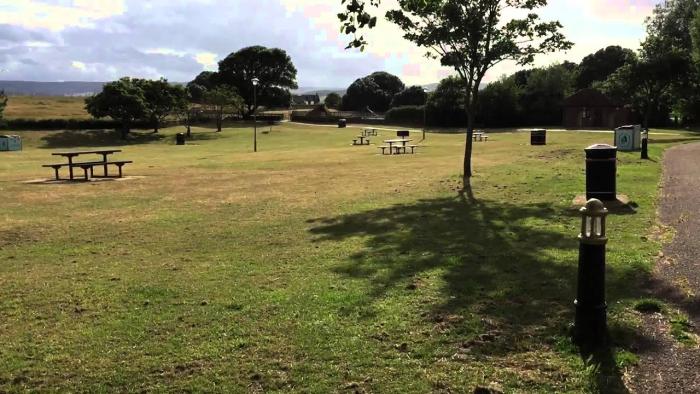
Maer Park, Exmouth BBQ area
Some parks provide designated BBQ areas, including Cranbrook Countryside Park, Dawlish Countryside Park, The Maer in Exmouth and Lime Kiln in Budleigh Salterton. Please make sure you only use the designated areas and not the rest of the park. Rules at other parks will vary, so it is very important to check any signage before you light up.
Top tips for having a BBQ:
- Always check whether the place you’re visiting is a nature reserve – these sites often have extra rules to protect the vulnerable habitats and species. In most cases, BBQs will not be permitted here, so it’s best to bring a picnic instead.
- Use a reuseable BBQ and sustainably sourced charcoal.
- Make sure your BBQ is used safely, away from flammable surfaces, the BBQ is put out properly afterwards, and of course – leave no trace.
What to see this season..
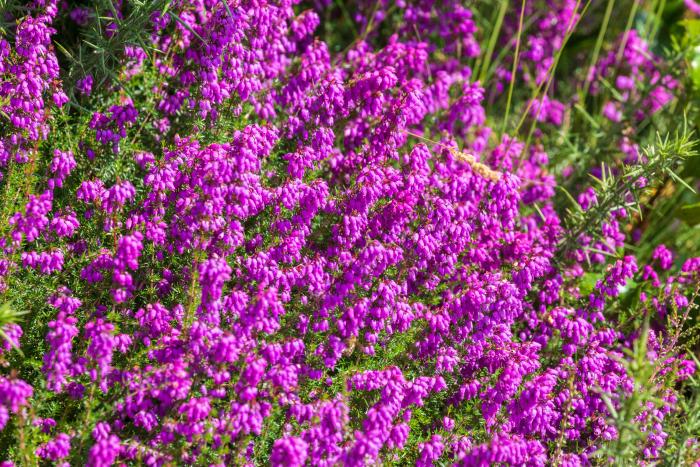
We have three different types of heather on the Pebblebed Heaths – bell, ling and cross-leaved – and we challenge you to find them all! August is the best time to see all three in flower when they light up the heaths in dazzling shades of purple. Thriving in nutrient-poor, acidic soils, heather is also a rich source of nectar and an important food source for pollinators.
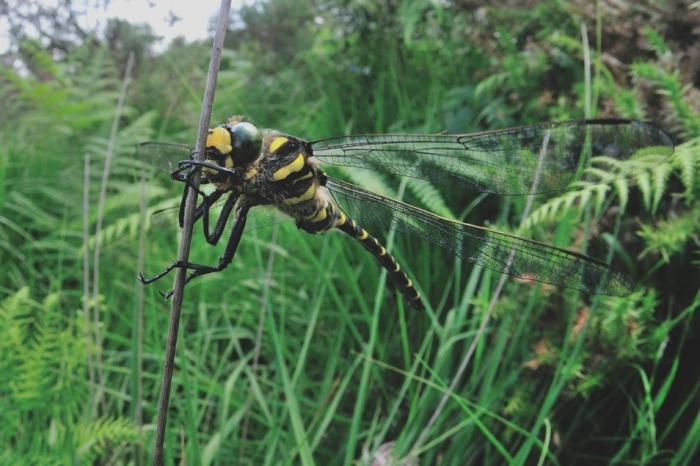
Found near freshwater on the wet heath or pools such as those on Aylesbeare Common or Bystock, the golden-ringed dragonfly is a real spectacle! Growing up to 8.4cm in length, with a black body marked by striking golden rings, it is a powerful and impressive hunter. These dragonflies are easiest to spot on the wing from June to August.
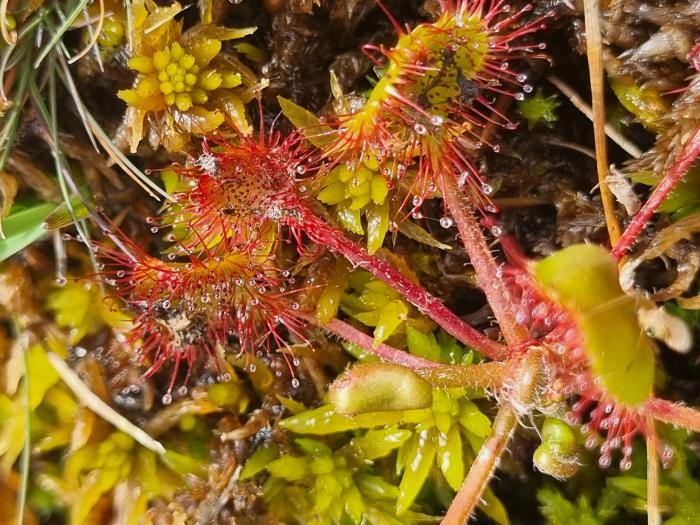
Also a lover of wet heath, the sundew is a fascinating carnivorous plant that catches insects using its sticky ‘dew’. You may wonder what led a plant to evolve such a trait - but in the nutrient-poor, acidic habitats it calls home, this clever adaptation allows it to gain the nutrients it needs to survive.
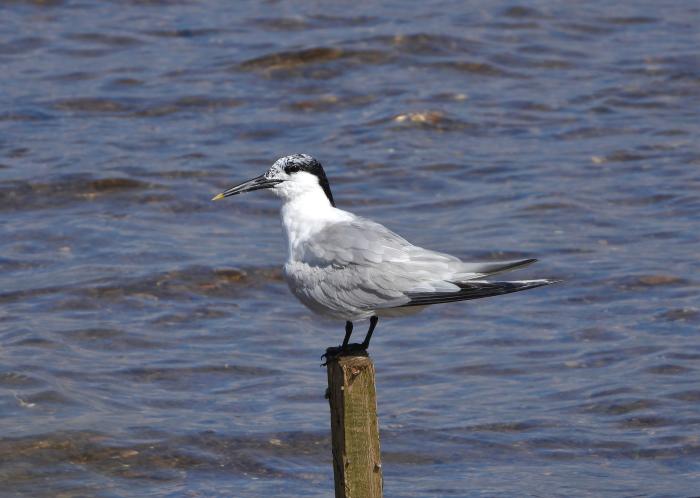
With a distinct and familiar, squeaky call on the estuary, the sandwich tern arrives in spring, spending the warmer months dive-bombing their prey of small fish such as herring, sand eels and sardines. These black-capped birds have a black bill with a yellow tip, but the best way to ID them is through their call and behaviour.