
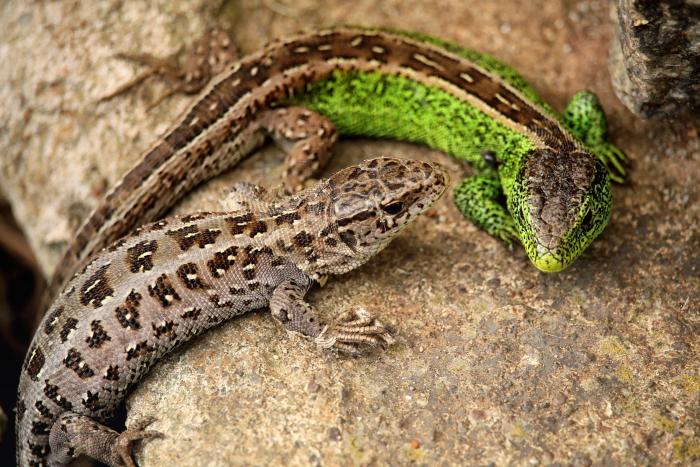
Sand Lizards: A Conservation Success
Historically found in the UK on dry, sandy lowland heaths and coastal sand dunes, sand lizards are susceptible to habitat loss due to changes in land management and climate change.
To help protect the species, in the mid-1990s the Herpetological Conservation Trust (now the Amphibian and Reptile Conservation Trust) selected Dawlish Warren Nature Reserve as a suitable sand dune location to introduce Sand lizards from populations living in Dorset. This proved to be a success, and the species is now well established here.
Identification
Emerging from hibernation from late March to April, both sexes are nearly 20cm in length with distinct twin dorsal stripes and brown markings down their backs. On warmer days they can be seen basking in sunny spots close to mature vegetation for cover, before the males’ flanks turn a striking bright green during breeding season in late April and May.
Habitat
The dune system at Dawlish Warren offers open, undisturbed sand, sometimes inside an existing rabbit hole in which the female Sand lizard digs a burrow and lays a single clutch of 6-15 eggs around late May or early June. The hatchlings crawl out of their eggs about two months later, already the length of a matchstick.
Diet
Sand lizards mainly eat invertebrates like spiders, grasshoppers, crickets, flies, beetles and caterpillars but on occasion they will also consume slugs, berries, fruits and flower heads.
Threats
They can live for over 10 years and due to their longevity and fragmented habitats Sand lizard populations can be prone to inbreeding. The most pressing threat to the Dawlish Warren colony, however, is likely to be the continued erosion of the dune ridge following the more frequent and severe storms of recent years. Combined with failing sea defences, the future of Warren Point and its reptile inhabitants hang in the balance.
Because Sand lizards are one of the UK’s rarest reptiles, they are strictly protected by law. It is an offence to capture, kill, disturb, or injure them; to damage their breeding sites and resting places; or to possess or trade in them.