
Goodbye Sandals, Hello Shorebirds: Autumn with the Wildlife Wardens
Welcome to the latest edition of Shores, Heaths and Dunes, the newsletter from South East Devon Wildlife.
As autumn begins to settle in and the days grow shorter, a collective sigh of relief resonates throughout the natural world, and within the Wildlife Warden team. Thank goodness, finally a chance to sink into the familiar, overstuffed armchair of autumn and unwind after the manic business of summer. From this place of comfort, I’m excited to share some Warden team highlights with you: from sun-soaked festivals and Sunday crafter-noons to the recent arrival of our winter shore birds. Did someone say tea?
Festivals, Heath Week & Family Fun
Back in July, Wardens Claire and Sama headed to Exmouth Festival, one of the most vibrant and engaging events of the season. The theme this year – Stories from the Sea – felt like a natural fit for us, setting the stage perfectly to talk about bird migration and our winter visitors from distant shores. We were also really heartened to see how eco-conscious the whole festival was – a hopeful sign for the future. Well done Exmouth Town Council!
The last week of July was Heath Week, always a highlight in our calendar – and this year didn’t disappoint. Thank you to every family, walker, wildlife-lover and curious visitor who came along, asked questions, and joined in. Your enthusiasm was inspirational!
Our standout moments? Well, Sunday Crafter-noon to start! The atmosphere was relaxed and creative, with visitors getting hands-on with embroidery, ink printing, and even spoon carving. Huge shout-out to our very own Neil Harris for hosting this fantastic session.
Later in the week, we co-hosted Bystock Discovery Day in collaboration with Devon Wildlife Trust. A wonderful nature themed celebration - from nature bracelets to butterfly crafts, flapping bats, moth gliders and good old-fashioned pond dipping – it was absolutely joyful. A big thank you to all the brilliant volunteers that made this day happen – your energy and support are what make days like these so special for all the visiting families (and for us). Thank you also to everyone who came and gave us such glowing feedback – it really felt like the best Discovery Day in years – I’m incredibly proud of what we achieved together.
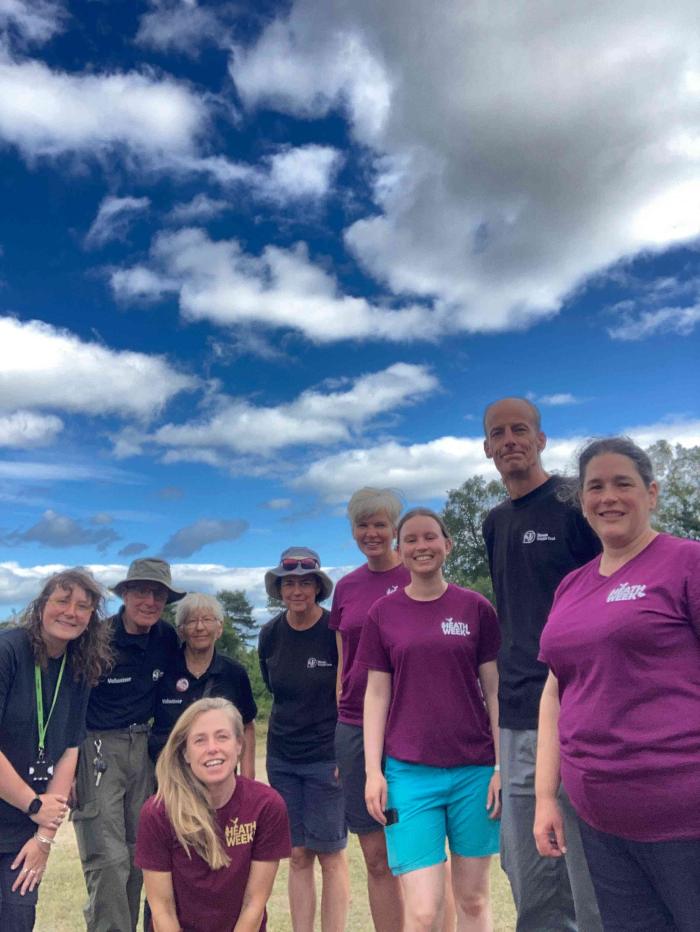
Bystock Day Team Photo
September: New Season, New Visitors
Wildlife Refuge Competition. In case you missed it, we kicked off September 1st with something exciting – the launch of our Wildlife Refuge Competition! Each month until the end of November, we’re giving away an FSC fold-out bird guide AND two tickets on a birdwatching cruise with Stuart Line Cruises. A brilliant way to spot migratory birds and learn about the Exe in a relaxed setting – don’t miss out, details on how to enter are below!
Exmouth Wildlife Refuge. Headline news: Loads of birds already using the refuge this year! Right from launch day – Sept 15th - Dark-bellied Brent geese, Light-bellied Brent geese, and some beautiful black-tailed godwits still in breeding plumage present on the first day. It made my eyes very happy. A magical start to the season.
New to the flock and not sure what species I’m wittering on about? Perfect - We’ve made winter wading birds the theme of this edition of Shores, Heaths and Dunes. Scroll on for articles to help you get to know some of our firm favourites — from graceful Godwits to rosy-pinned Redshank — and to shine a spotlight on the SPA stars (that’s Special Protection Area) who depend on these mudflats and sandbanks to rest and refuel. Whether you're a seasoned spotter or someone who simply enjoys the company of birds on a blustery walk, we hope you’ll find something to inspire, inform, and delight.
In addition, if you want to know more about our shore birds, this year we are trailing free guided birdwatching sessions from our jolly blue info-gazebo at Exmouth Wildlife Refuge. No need for kit if you don’t have any, or even to book, just bring along your enthusiasm and curiosity. Listings below.
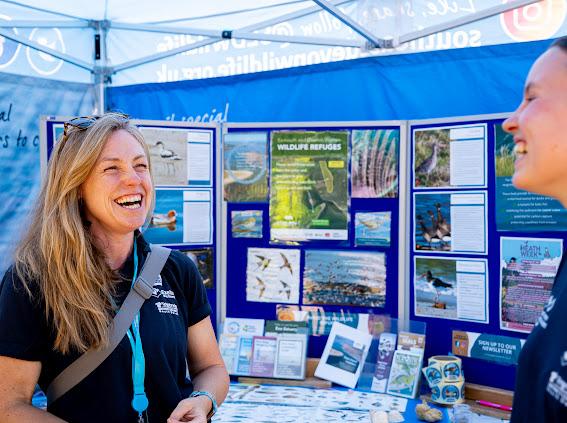
Warden Sama and Claire (Jennifer Satterly from Melyn Moon Photography)
Hopefully we’ll see you out on site soon, but for now, thanks for being part of our community. Whether you joined us at an event, followed along online, or are just now discovering what we’re all about – we’re glad you’re here. Here’s to the turning leaves, chilly mornings, and the wonders of wildlife still to come.
Warden Sama and the South East Devon Wildlife Team
What to look out for?
Ospreys
These incredible birds pass through Devon and Cornwall on their way from breeding grounds in Scotland, Cumbria and Wales to wintering grounds in West Africa, sometimes covering up to 430km in one day! A juvenile osprey has recently been spotted perching on the dead tree in the middle of the Otter estuary, look out for other birds alarm calling to give away its location, despite the fact ospreys don’t eat other birds, only fish.
At several locations in East Devon, osprey nesting platforms have been constructed to try and tempt the birds to stay here and breed, maybe one day we’ll get to see ospreys all summer as well!
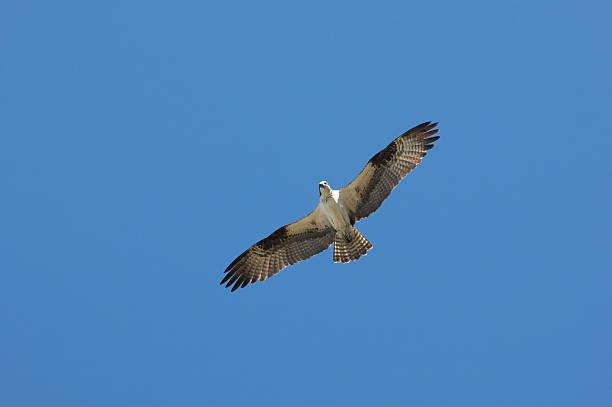
Osprey
We have had the pleasure of seeing the Brent geese start to return to Exmouth Wildlife Refuge over the last couple of weeks. The Brent geese are understandably flighty, they’ve spent their summer nesting in Siberia and are not used to trains, cars, people and loud noises. We know that they adapt quickly to noises which are regular like the train and also take cues from the other birds around them that don’t fly away when they hear the bin lorry reversing! However, unexpected movement like people and dogs on the shore, paddleboards and kayaks can still cause the whole flock to take flight which prevents them feeding and resting after their long flights, of around 3,000 miles!
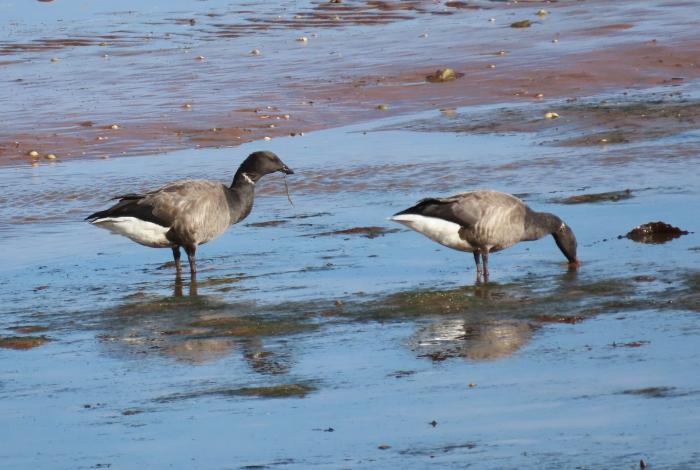
Dark-bellied Brent Geese
Wigeon have also started appearing at the Exmouth Wildlife Refuge over the last couple of weeks. These very handsome ducks do breed in low numbers in central and northern Scotland, but the majority of the of winter population migrate from Iceland and Scandinavia. They are dabbling duck and can be seen feeding in high numbers from Mudbank in Exmouth, as well as at RSPB Bowling Green Marsh. Listen out for the drakes unusual whistling call, very unlike the quacking we usually associate with ducks.
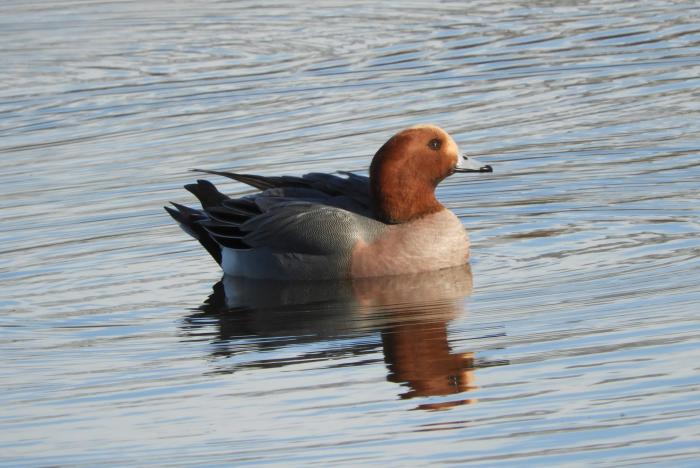
Wigeon (Richard Morris)
You might have noticed the abundance of berries, nuts and fruit this year? This is known as a ‘mast year’ and is a natural phenomenon thought to repeat on a roughly 5-10 year cycle where certain trees and shrubs produce an abundance of nuts and berries. A dry spring where more flowers are pollinated and a wet September to feed the trees and shrubs appears to be the winning combination. Look out for hawthorn berries, which are dark shiny red and sloes on blackthorn which are a deep powdery blue, as well as acorns from oak trees and conkers from horse chestnut. All these extra fruit and nuts will have an extraordinary effect on the natural world, boosting the food sources of all sorts of wildlife and resulting in more birds and animals making it through the winter and going onto to reproduce more successfully next year.
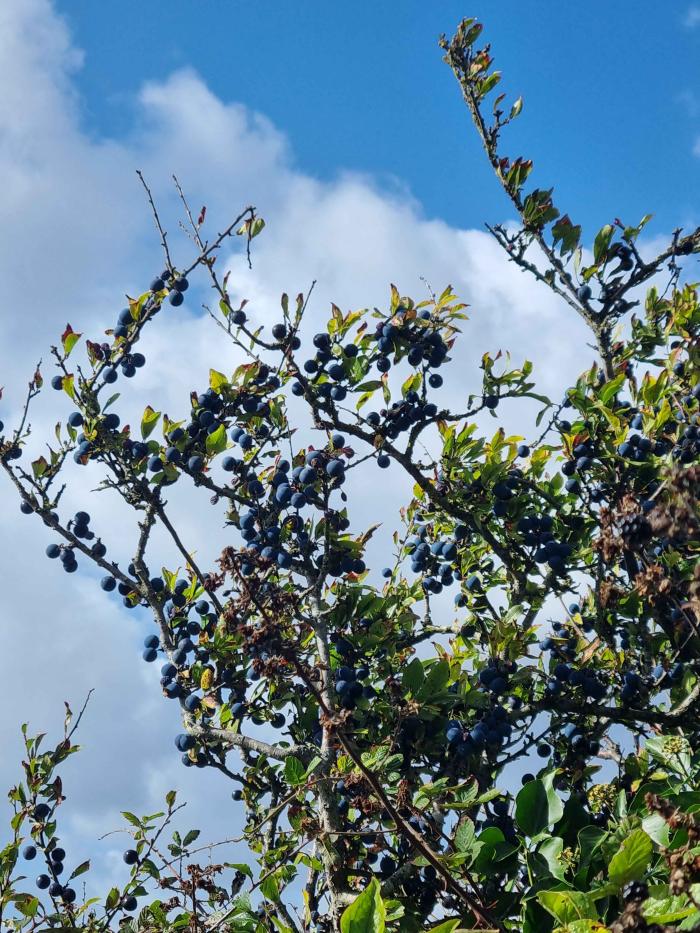
Sloes on Blackthorn
Competition Time!
This autumn, we’re giving you the chance to enjoy one of the most spectacular wildlife experiences on the Exe Estuary – and support local conservation while you’re at it!
Every month from September to November 2025, you could win a Guided Bird Watching Cruise for two with Stuart Line Cruises, plus a handy FSC Overwintering Coastal Bird Guide to help you identify the incredible species you’ll spot along the way.
The best part? By entering, you’ll be helping to spread awareness about the thousands of overwintering birds that make the Exe Estuary their home each year.

Stuart Line Cruise on the River Exe (Sama Euridge)
Every winter, flocks of migratory birds travel hundreds – sometimes thousands – of miles to reach the Exe. When they arrive, they rely on its rich mudflats and calm waters as a safe place to rest and feed after their long journey.
To give them the peace they need, two Wildlife Refuges have been created: one at Exmouth Duck Pond, active from 15 September to 31 December, and another at Dawlish Warren, which is protected all year round.
We’re asking everyone – walkers, dog owners, and water users alike – to do their part by avoiding these areas during the refuge periods. It may not seem like much, but small actions make a big difference. Birds disturbed too often waste vital energy flying away instead of feeding or resting, which can affect their survival.

By staying clear of the refuges, you’re giving these amazing birds the space they need to thrive.
How to Enter
It couldn’t be easier to take part. Simply visit our website, answer a few quick questions, and submit your entry. Each month, one lucky winner will be drawn at random – remember to check you email!
If your name doesn’t come up the first time, don’t worry – you’ll have another chance next month!
👉 Enter here: www.southeastdevonwildlife.org.uk/competition
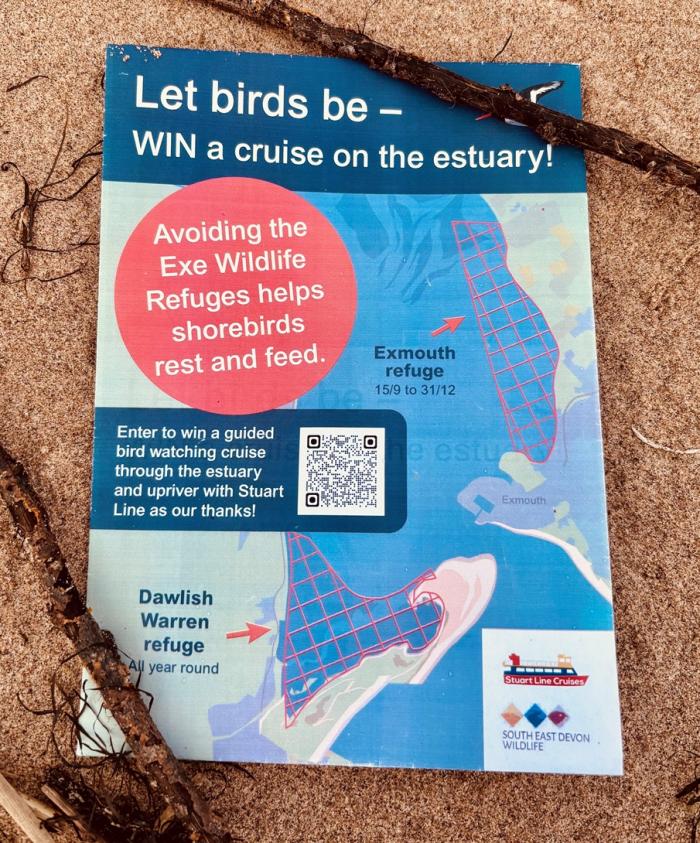
Competition Flyer (Claire Spence)
Meet Some of the Estuary’s Winter Visitors
One of the stars of the show is the Wigeon – a duck with a twist! Unlike most ducks, Wigeon often graze like geese, feeding on grasses and plants across the mudflats, though they’ll also dabble in the water with their trademark “bottoms up” pose.
These elegant birds breed across the Arctic regions from Norway to Siberia before heading south to winter here on the Exe. Their soft, whistling “whee-ooo” calls are a familiar sound on cold mornings, and huge flocks can often be seen resting together on the water. Although Wigeon are listed as Amber on the UK Birds of Conservation Concern list, the Exe remains one of the best places in the country to see them in their hundreds.
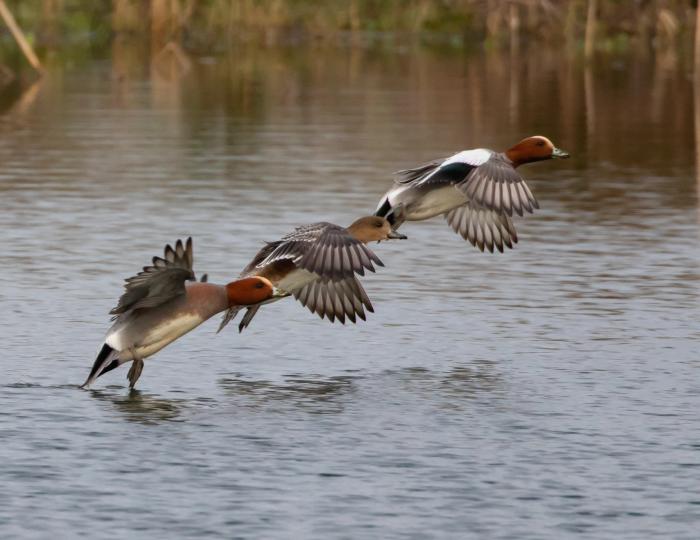
Two Male Wigeon (Top and Bottom) and One Female Wigeon (Middle)
Another favourite is the Dunlin, a small, energetic wader with a slightly down-curved bill. Watch them scurrying across the mud, probing for food, or performing breath-taking aerial displays as they twist and turn in synchronised flocks.
The Dunlin you see here in winter migrate from Eastern Europe and Russia, while others stop off briefly before heading further south to Europe and North Africa.
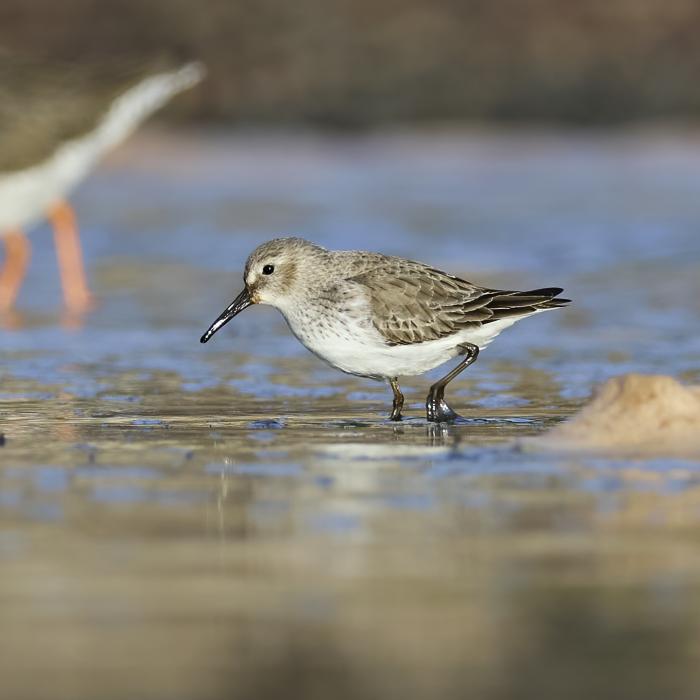
Dunlin (Tom Collier)
Enjoy the Estuary – the Peaceful Way
A Bird Watching Cruise with Stuart Line is a perfect way to experience the magic of the Exe Estuary in winter. From the comfort of the boat, you can watch thousands of birds feeding and resting without disturbing them or entering the refuge zones. It’s a wonderful opportunity to see these incredible travellers up close while learning more about their journeys and behaviour.
So, whether you’re an experienced birder or simply love a relaxing day out surrounded by nature, this is a chance to do both – enjoy the estuary and help protect it.
Free Birdwatching Sessions at Exmouth Wildlife Refuge
This autumn and winter, the South East Devon Wildlife Warden team is hosting a series of free, informal birdwatching sessions at Exmouth Wildlife Refuge – want to know more about the incredible bird life on the Exe? Pop along!
These relaxed, drop-in style events offer a great chance to learn about the amazing bird species that rely on the Exe Estuary as a safe feeding and resting ground during the colder months. Whether you’re a seasoned birder or a complete beginner, come along for a closer look at some of our most iconic winter visitors.
You’ll find the wardens at their info gazebo on the following dates:
- Thursday 23 October – 09:30 to 12:00
- Friday 24 October – 10:00 to 12:30
- Friday 7 November – 09:00 to 11:30
- Friday 14 November – 14:30 to 15:30
- Friday 21 November – 09:00 to 10:00
- Thursday 27 November – 11:00 to 13:00
- Thursday 11 December – 12:00 to 14:00
No need to bring anything – the team will have binoculars and a telescope set up for shared use, but if you have binoculars, feel free to bring them along. Pop us an email to book your slot, or just pop along!
You can expect to see species like Dark-bellied Brent geese, Wigeon, Curlew, and Oystercatcher, and learn how to identify many more of the Exe Estuary’s star SPA species.
All sessions are free, friendly, and open to all — just drop by!
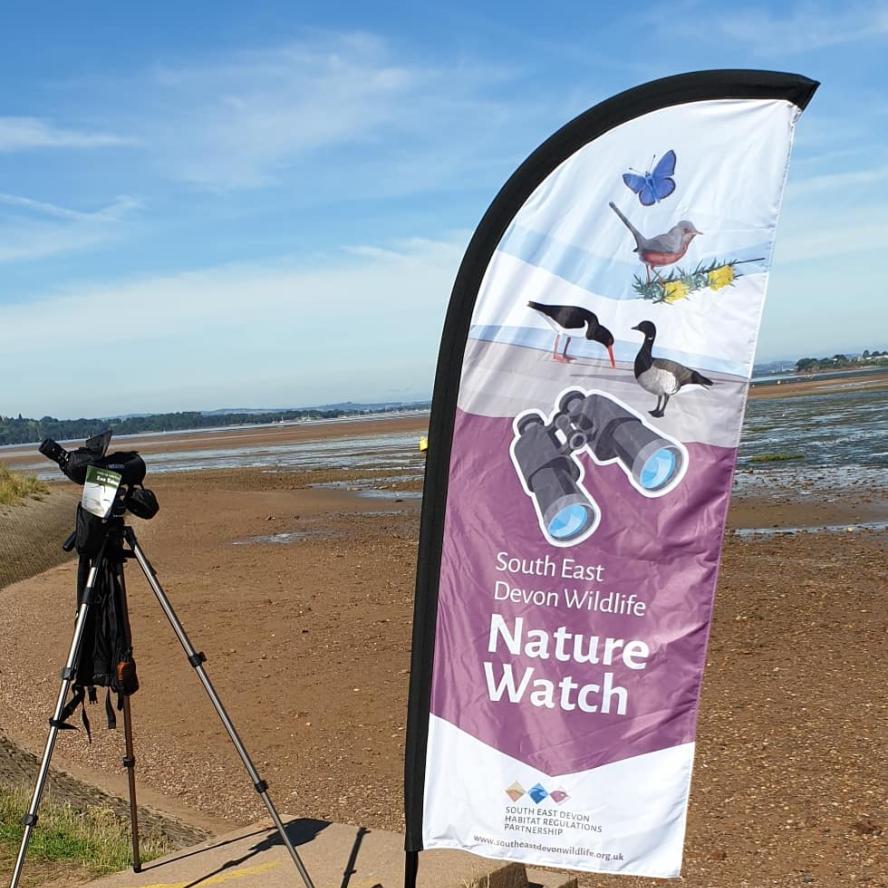
Come and Join us at the Exmouth Wildlife Refuge
Winter Wonders of the Exe Estuary: Black-tailed & Bar-tailed Godwits
As the days shorten and winter creeps in, the Exe estuary becomes a haven for thousands of overwintering birds. Among the most elegant and fascinating are Black-tailed Godwit (Limosa limosa) and Bar-tailed Godwit (Limosa lapponica). These long-legged waders travel thousands of miles to escape the harsh Arctic and northern European winters, gracing the mudflats of the Exe from September through March.
Despite appearing superficially similar (elegantly long legged with long straight bills), Black-tailed and Bar-tailed Godwits have key differences — in appearance, behaviour and migration routes. Keen to learn more? Let’s have some bullet points then!
Black-tailed Godwit
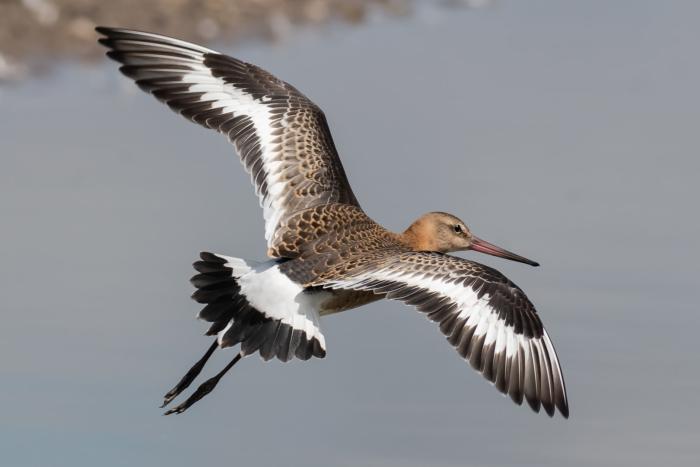
Black-tailed Godwit
- Most common godwit on the Exe in winter.
Black and Bar-tailed Godwits have similar over wintering populations within the UK (around 41,000 and 53,000 respectively, in case you like a bit of data like me), but you’re much more likely to see a Black-tailed Godwit on the Exe. This may be a reflection on available habitat, Black-wits having a slight preference for feeding in shallow water and soft estuarine mud of the upper estuary, close to the undisturbed haven of RSPB Bowling Green Marsh.
- Shows a bold black tail and an obvious white wing bar in flight.
While the black tail may be evident in the name, standing side-by-side, it can still be tricky to tell these birds apart. In flight, it’s much easier: Black-tailed Godwits have an obvious white wing bar and Bar-tails don’t. I remember it as: bar-no bar.
- Long, straight bill with orange at the base.
The bill is longer in the female, so the different sexes don’t compete for food. So smart, if only that was the same in human relationships.
- Tall, elegant build with long legs.
So elegant, but critically longer than its similarly named counterpart. In flight, the feet protrude behind the bird. When standing, the difference is most evident in the upper section – the tibea – look between the ‘knee’ and ‘tummy’.
- The UK mainly hosts birds from Icelandic breeding grounds, which migrate here for the winter.
Bar-tailed Godwit
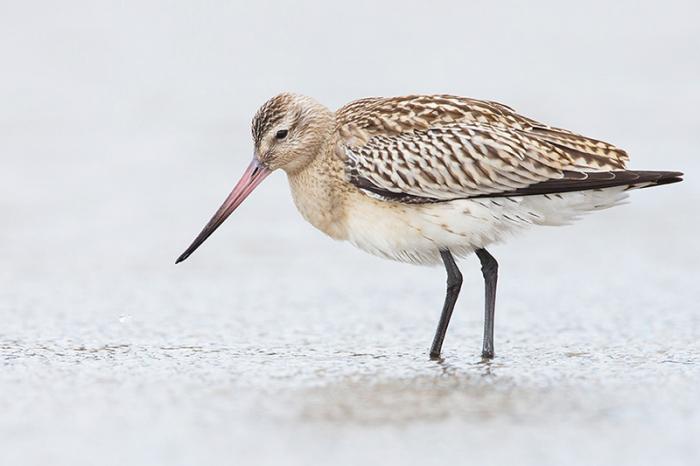
Bar-tailed Godwit (Bird Wise, North Kent )
- Less numerous on the Exe, but present in smaller flocks or as individuals.
- Tail is barred, not solid black — giving it its name. It’s so subtle, so you do have to get your eye in on this one.
- Slightly upturned bill. And I mean, slight.
- Shorter legs
This is really evident in flight, where the feet are not visible trailing behind the bird – as they are with Black-wit.
- Prefers slightly more coastal areas, often seen on sandier areas such as at Dawlish Warren NNR and occasionally Exmouth Wildlife Refuge.
- British wintering birds breed in northern Scandinavia and Siberia, following the Baltic coast along East-Atlantic flyway.
Migration Routes: Two Paths, Two Stories
While both species are long-distance migrants, the routes they take to reach the UK differ significantly, affecting their population dynamics and conservation pressures.
Black-tailed Godwit (Icelandic population)
- Breeds in Iceland.
- Migrates directly to Britain and Ireland, with many wintering along estuaries like the Exe, Thames, and Wash.
- Some continue to Spain or Portugal, but the UK is a major stronghold.
- The route is relatively short, direct, and well-studied.
- Because of this, the Icelandic Black-tailed Godwit population is stable, though still classified as Near Threatened due to limited breeding range and wetland pressures.
Bar-tailed Godwit (European population)
- Breeds in the high Arctic tundra of Scandinavia and western Siberia.
- Migrates along the East Atlantic Flyway, stopping at key sites such as the Wadden Sea (Netherlands, Germany, Denmark) before reaching the UK, Ireland, and west Africa.
- This longer and more complex route depends heavily on international stop-over sites — especially the Wadden Sea, a vital feeding ground.
- Bar-tailed Godwits wintering in the UK belong to the lapponica subspecies, which is currently doing reasonably well — but its worth knowing that other global populations (like the Pacific baueri subspecies) are facing steep declines due to habitat loss along their routes.
- The reliance on multiple staging sites makes Bar-tailed Godwits more vulnerable to changes along the flyway, especially coastal development and sea-level rise.
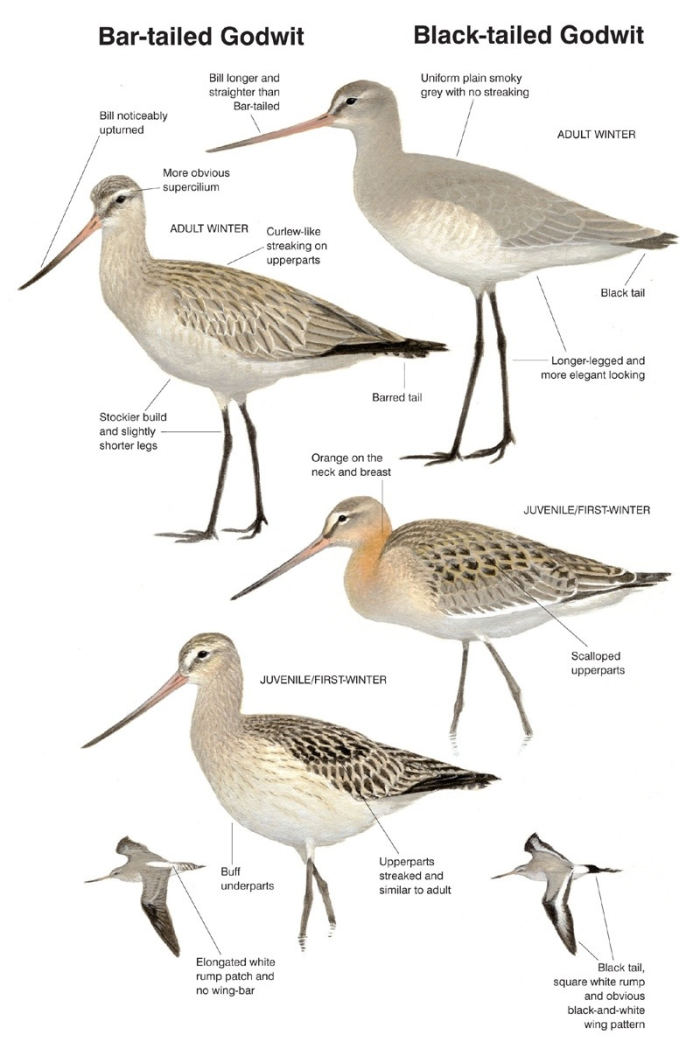
Difference between Black and Bar-tailed Godwits (planetofbirds.com)
Winter Behaviour: Feeding and Flocking
In winter, godwits prioritise rest and respite. This time is essential to re-gain body weight lost by the effort of migration and breeding.
- Feeding: Using their long bills to probe the mud, they seek out worms, molluscs, and crustaceans. Their sensitive bills can detect prey even in total darkness — making dusk and dawn prime feeding times. Look out for them along the shore and adjust your route to avoid disturbing them.
- Roosting: At high tide, godwits gather in large roosts. See them locally at RSPB Bowling Green Marsh or Dawlish Warren Wildlife Refuge. These gatherings can be spectacular to witness, but please remember to give birds space and observe from a respectful distance.
- Social Dynamics: Black-tailed Godwits are often more gregarious, forming tightly packed feeding flocks, while Bar-tailed Godwits may spread out more thinly. To keep you on your toes, they also intermix.
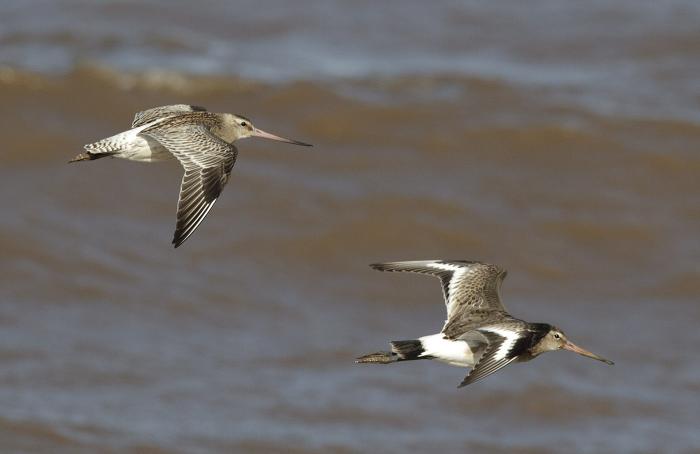
Above is a Bar-tailed Godwit and Below is a Black-tailed Godwit (Graham Catley)
Conservation - How You Can Help
On the Exe, rising sea levels, human disturbance, and pollution are ongoing concerns. Simple actions like keeping dogs on leads, avoiding roosting birds at high tide, and supporting habitat management make a big difference.
- Visit responsibly – observe birds from a distance, especially during cold snaps when energy conservation is crucial.
- Respect the Wildlife Refuges – remain out of the Wildlife Refuges to avoid disturbing wintering birds while they rest or feed.
- Support wetland conservation – whether through volunteering, donating, or spreading awareness, every action helps protect these migratory marvels.
- Interested in getting involved in bird counts? Monitoring the population of wintering birds guides the management of our nature reserves. The BTO runs training sessions on how to become a Wetland Bird Survey volunteer: details here
Final thought
Black-tailed and Bar-tailed Godwits are more than just seasonal visitors — they are global travellers relying on the health of the Exe Estuary for their survival. As you walk along the shoreline this winter, spare a moment to watch them — delicately stepping through the mud, resilient and graceful against the tide. They are a reminder of how connected our local landscapes are to faraway shores — and how vital it is to keep these places safe for generations of birds (and people) to come.
Warden of the Marshes
If you’ve ever walked along the Exe Estuary and heard a loud, sharp whistle echoing across the mudflats, chances are it was a Common Redshank (Tringa totanus) sounding the alarm. With their bright orange-red legs and clear, piping calls, these lively waders are hard to miss. They’re often the first to raise the alarm when danger’s near, earning them the well-deserved nickname “Warden of the Marshes.”
Redshanks have a speckled brown back and wings, a pale belly, and a straight bill that’s orange at the base and black at the tip. When they take flight, you can spot a bright white wedge on their back and tail — a real giveaway for anyone watching from the shore.
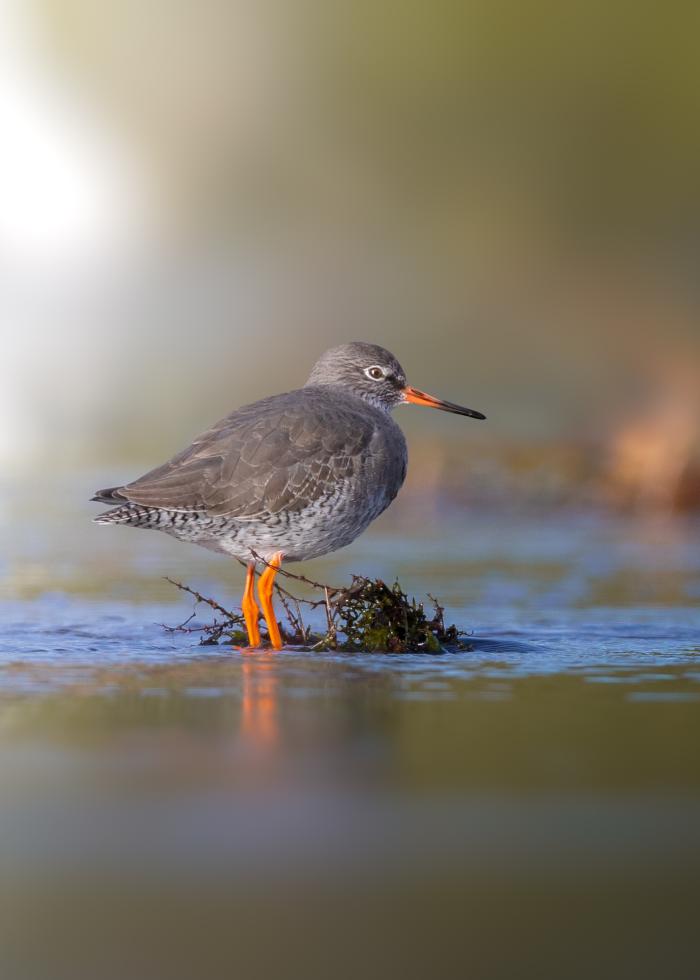
Redshank (Samuel Hazell )
Each winter, the Exe Estuary becomes a vital refuge for Redshanks, offering plenty of feeding grounds and safe roosting spots. Counts from the BTO’s Wetland Bird Survey (WeBS) show that while numbers naturally rise and fall from year to year, the overall population has remained fairly stable. The highest count was recorded in 1978 with 1,186 individuals, compared to 657 in 2017 — a gentle decline, but still a strong wintering presence on the estuary.
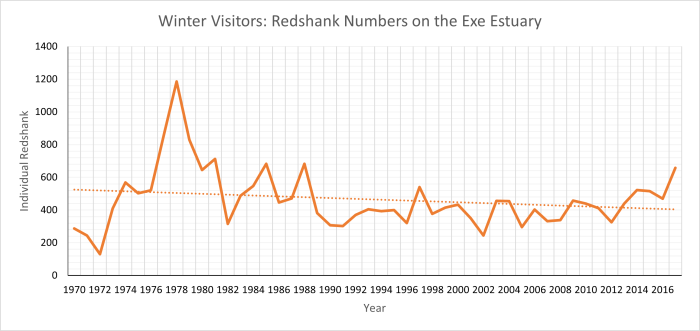
Data from Wetland Bird Survey (WeBS)
Redshanks are just one of the many birds that make the Exe Estuary such a special place. The site is protected as a Special Protection Area (SPA), a Site of Special Scientific Interest (SSSI), and a Ramsar site, recognising its international importance for wildlife. Each winter, it supports thousands of waders and waterfowl, including Oystercatchers, Grey Plovers, Dunlins, Bar-tailed Godwits and the ever-popular Dark-bellied Brent Geese.
While Redshanks do well on the Exe in winter, it’s a different story for their breeding populations across the UK. They’re now an Amber-listed species under Birds of Conservation Concern (2021), meaning their breeding numbers are in decline. Britain is particularly important for them, holding over 18% of north-western Europe’s Redshank population — that’s up to 172,000 breeding pairs.
When it comes to nesting, Redshanks are particular about their surroundings. They love open grasslands, mires and saltmarshes, where they can find a mix of short, damp grass for feeding and taller clumps (called tussocks) to hide their nests in. Each pair usually raises one brood a year, laying around four eggs, with both parents sharing incubation duties for about 24 days. The chicks hatch covered in soft down and with their eyes open, ready to walk and feed almost straight away. This independence helps them survive in such an open habitat — but it also makes them vulnerable to predators, which is why those grassy hiding spots are so important.
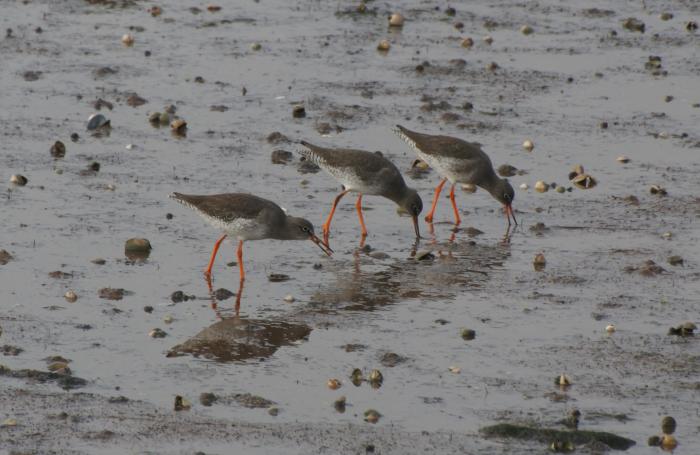
Redshanks at Topsham (Richard Morris)
Saltmarshes themselves are fascinating places — constantly changing as the tides bring in silt and shape the landscape into a maze of muddy creeks and pools. They’re full of life, buzzing with insects, bursting with plant growth, and providing food and shelter for countless birds. Sadly, we’ve lost around half of the world’s saltmarshes due to land reclamation, erosion, and rising sea levels.
Research by Lucy Malpas found that between 1985 and 2011, the number of Redshanks breeding on British saltmarshes fell from over 21,000 pairs to fewer than 12,000 — a 44% drop. The steepest declines were seen in the northwest of England, where heavy grazing by livestock remains common, even on some conservation sites. Although grazing can be beneficial in small doses, too much of it shortens the vegetation, removing the tussocks Redshanks need for nesting and leaving their eggs and chicks exposed to predators.
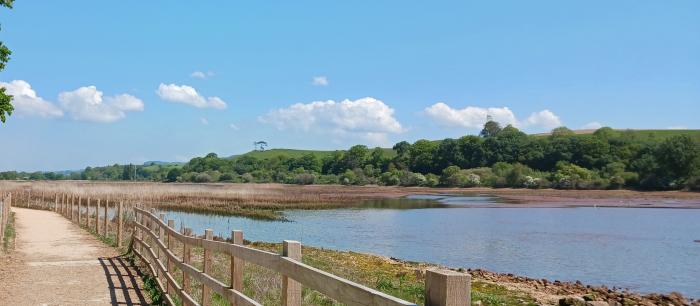
The Saltmarshes on the Otter Estuary (Euan Chan)
The good news is that we know how to help. Studies suggest that light, well-timed grazing created ideal Redshank habitat — keeping the right balance of open feeding areas and clumped nesting cover. The key is timing. By keeping livestock out of nesting areas between mid-April and mid-July, the Redshanks’ breeding season, we can protect their nests and give chicks a better chance to survive. Approaches like rotational grazing or delaying the start of grazing each year have proven especially effective.
Getting this balance right doesn’t just help Redshanks — it benefits a whole range of saltmarsh wildlife. These “wardens of the marshes” have long been a symbol of our estuarine landscapes, and with thoughtful management, we can make sure their bright calls continue to ring out across the Exe for many years to come.
Spotlight on small wading birds of the Exe Estuary
Winter wading birds are a challenging group even for experienced birders, as their plumage (feathers) often completely changes in the winter. Thank goodness for the smart black and white oystercatcher, the curved beak of the large curlew, and the bright red legs of the redshank!
This article is all about the small waders, often indistinguishable in the big flocks they fly about in; what to look for, how to tell the difference between them, where you’re more likely to see them, and some additional interesting facts.
On the Exe estuary we can get up to 20,000 birds over the winter coming from their breeding grounds to feed worms, insects and snails found in the rich mud. Part of the Wildlife Wardens job involves counting the number of birds and species present at three vantage point counts around the estuary, which is a tricky business, especially in winter! Flocks of smaller waders include dunlin, knot, sanderling and turnstone
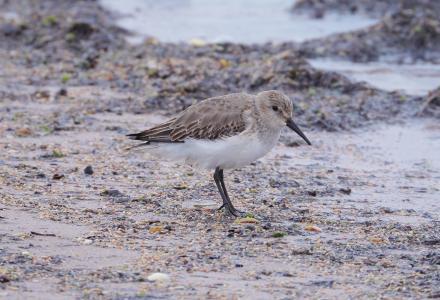
Dunlin in Winter Plumage (Lee Collins)
Dunlin are a small sandpiper, about the size of a starling. Their name comes from the Gaelic word ‘dun’ meaning hill and ‘linne’ meaning pool and refers to their habit of nesting in upland moors and bogs. We do have a breeding population in the UK uplands, and ringing data show these birds migrate south to Europe and North Africa during the winter, likely using healthy estuaries like the Exe as a stop off on the way. Our wintering Dunlin, arrive in September from breeding grounds in Eastern Europe and Russia are far more numerous.
Their breeding plumage is unmistakeable as they sport a black patch on their belly, and brick red wings and back. They also have a relatively long, slightly hooked beak. However, in winter they are greyish brown on their wings and back with a subtle light grey breast band. Even more difficult is birds that are between breeding plumage and winter plumage: is that an entirely different species, a juvenile, or slow to moult adult? In flight, dunlin have weak white wing bars and a white rump with an obvious black central strip running from the back to the central tail feathers.
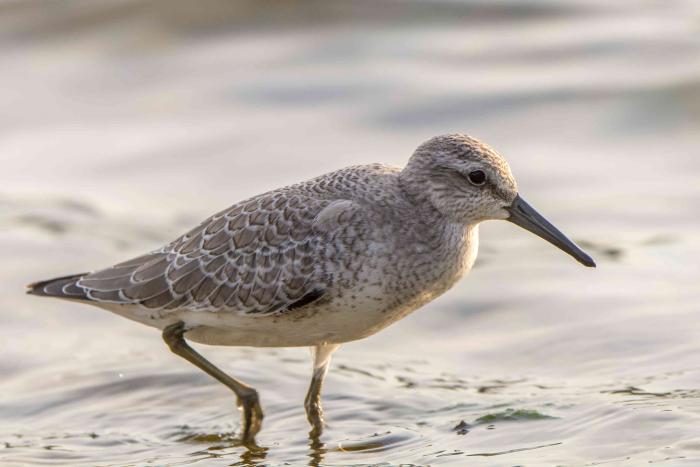
Knot in Winter Plumage
Knot are a medium sized wading bird, about the size of a blackbird, with short straight beak, dark green short legs and in winter, silvery grey wings and back, a white belly and grey breast band. In flight, knots have darker outer wing contrasts with the pale inner wing. Some describe them as slightly out of proportion with a small head and short legs on a bigger body. Worldwide, there are six different races of knot, one of which (islandica) comes to the UK from Greenland and Canada to overwinter, in fact the UK supports about 80% of the overwintering population of ‘islandica’ and therefore UK estuaries are critically important for this species.
As with dunlin, knots’ brick red breeding plumage can start to develop in early spring which can result in mis-dentification, as they change from their duller winter plumage.
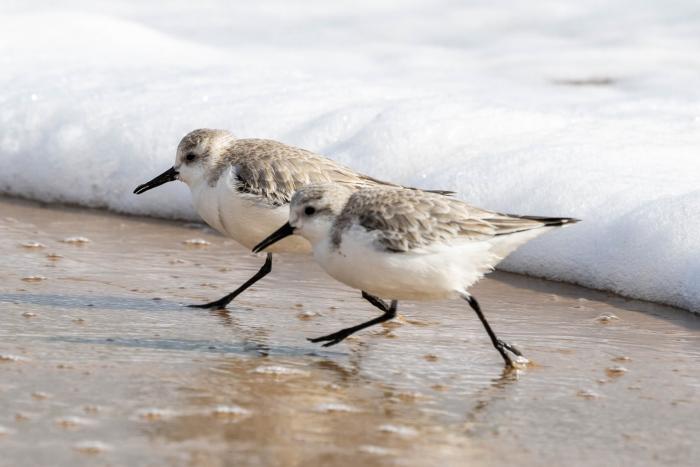
Sanderling in Winter Plumage (Nick D'Agorne)
Sanderling can sometime be found with flocks of dunlin and knot, however their behaviour when feeding is vastly different from other wading birds. There’s no mistaking them as they run along the edges of beaches and in and out of the waves like a clockwork toy. We often see them along the water’s edge at Dawlish Warren.
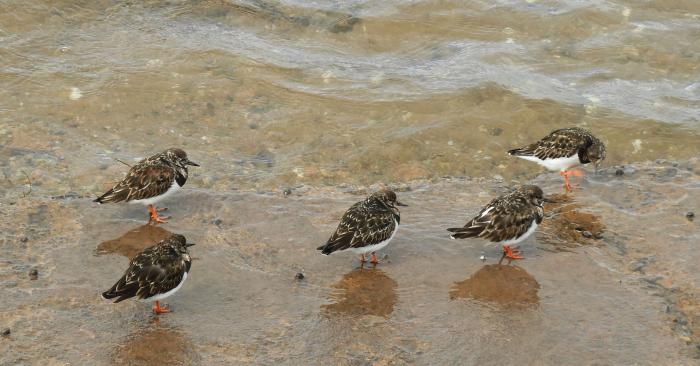
Turnstone (Richard Morris)
In comparison to dunlin and knot, turnstone is a much easier sandpiper to identify even though its plumage changes in the winter. They have a dark brown back and wings, and a black pattern on the face and breast and a white chin and belly and bright orange legs. They breed in the Arctic tundra and come here in the winter to feed in the estuary. We often see them at the Exmouth Wildlife Refuge near the Imperial Recreation ground, where they feed on worms and insects by turning over stones (hence the name). They can also occasionally be seen at Dawlish Warren with flocks of sanderling. Members of the public have also told us they see them in St Ives feeding on chips!
The key with the identification is trying to spot subtle differences in separate species such as slightly different sizes of body, straight or hooked beaks, colour of legs, where you see them (on the river or on the coast), and perhaps most importantly what their behaviour is like. The more time you spend looking at the birds and observing what they’re doing, the easier it should become to spot the different species even with changes in plumage colours. We’re looking forward to seeing the large flocks of birds returning to the Exe estuary, and hope you are too!
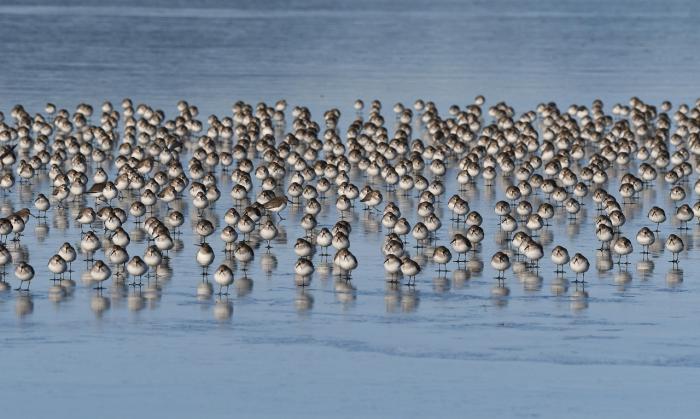
Flock of Dunlin (Veronika Andrews)
Aylesbeare Common Reserve News – October 2025
Our news this month comes from our newest residential volunteers, Judit & Sam, who started at the beginning of September...
It’s been a whirlwind of a month since joining the team here at RSPB, getting to know the area, the landscape, and all the requirements that make up the management of such a significant habitat for wildlife.
A common task is helping with fence repairs to ensure the conservation grazing livestock are secure. This is hard but rewarding work – having to tension wire, knock-in posts, and of course digging holes – which wouldn’t be so bad if it wasn’t for the namesake of the area – the pebble-beds!
Talking of conservation grazing, it’s been a real joy to help take care of our small herd of grazing ponies, including Dartmoor and Exmoors. They’re great at chomping-away at the scrub that could quite easily swamp the heather that makes this area so important. Our thrice-weekly task of checking on their welfare is a welcome break from the harder-graft and watching them gallop over the ridgeline when we call, is a beautiful sight.
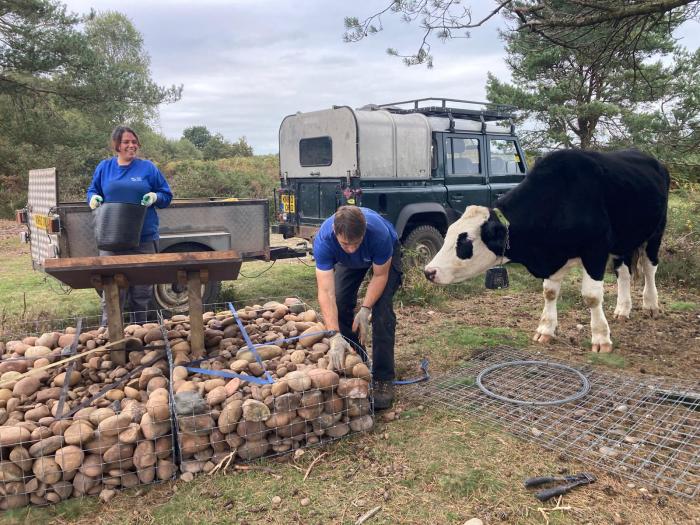
Judit and Sam working on Aylesbeare Common
Of course, it’s not just the ponies (and cattle) that help with the scrub clearing, it’s also those dedicated volunteers who join us twice a week with loppers, saws and thick skin that really help make an impact. Despite some of them having a fair few years on both of us, they easily far-outpace our efforts - only occasionally stopping for a cup of tea from a thermos and a friendly chat, before diving back into the gorse.
Another important aspect of the common is the archaeological features across the landscape. One example, up on Aylesbeare, are the Bronze-age barrows (burial mounds) which date back around 4,000 years. You may have noticed a new sign to inform visitors about these historic sites, which we helped to install. The old one had seen better days, and a few back-scratches from the cattle, so had certainly run the course of its life.
The new one, beautifully crafted by another one of our weekday volunteers (John), has been placed within gabions of local pebbles, to help keep the cattle from being too tempted to rub their rears on it, but also as a nod to the underlying geology of the area. It’s surprising how many of these stones it takes to fill one of the cages and moving them from the quarry, to the site, and into the sign base was certainly a great workout – but one we hope our visitors appreciate!
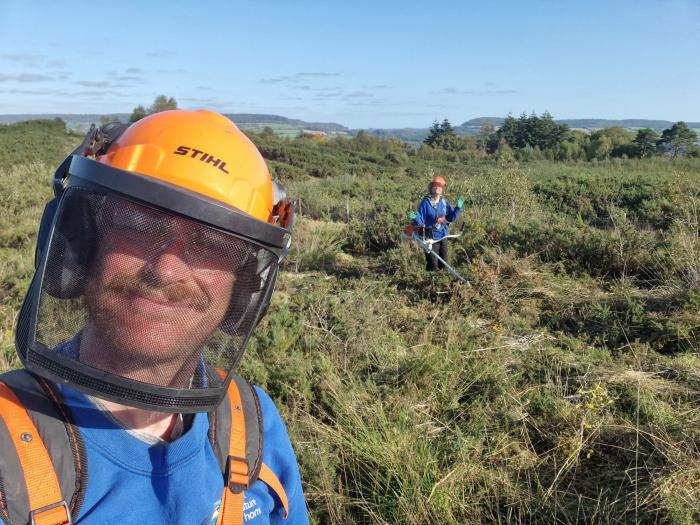
Sam and Judit Strimming
After a hard day’s work, it’s great to get back to the accommodation, relax, have some dinner, and fire up the moth trap – essentially a fabric box with a light inside that attracts the moths, so we can harmlessly identify them. Being a couple of amateurs when it comes to moths, it’s been a fascinating journey seeing what we’ve got when we open it up in the morning.
Finds have included light emerald, centre-barred sallow, straw dot, spruce carpet, snout, canary-shoulder thorn, setaceous hebrew character, brindled green and blood vein. By far the most common visitors have been large-yellow underwings, and even more popular for a week or so was the lunar underwing – with one morning revealing 25 in the trap!
All in all, it’s been a great experience so far, and we’re really looking forward to seeing what the autumn has in store for us out on the common. If you see us at work when visiting, feel free to come and say hi – we’d love to meet you!
Sam & Judit